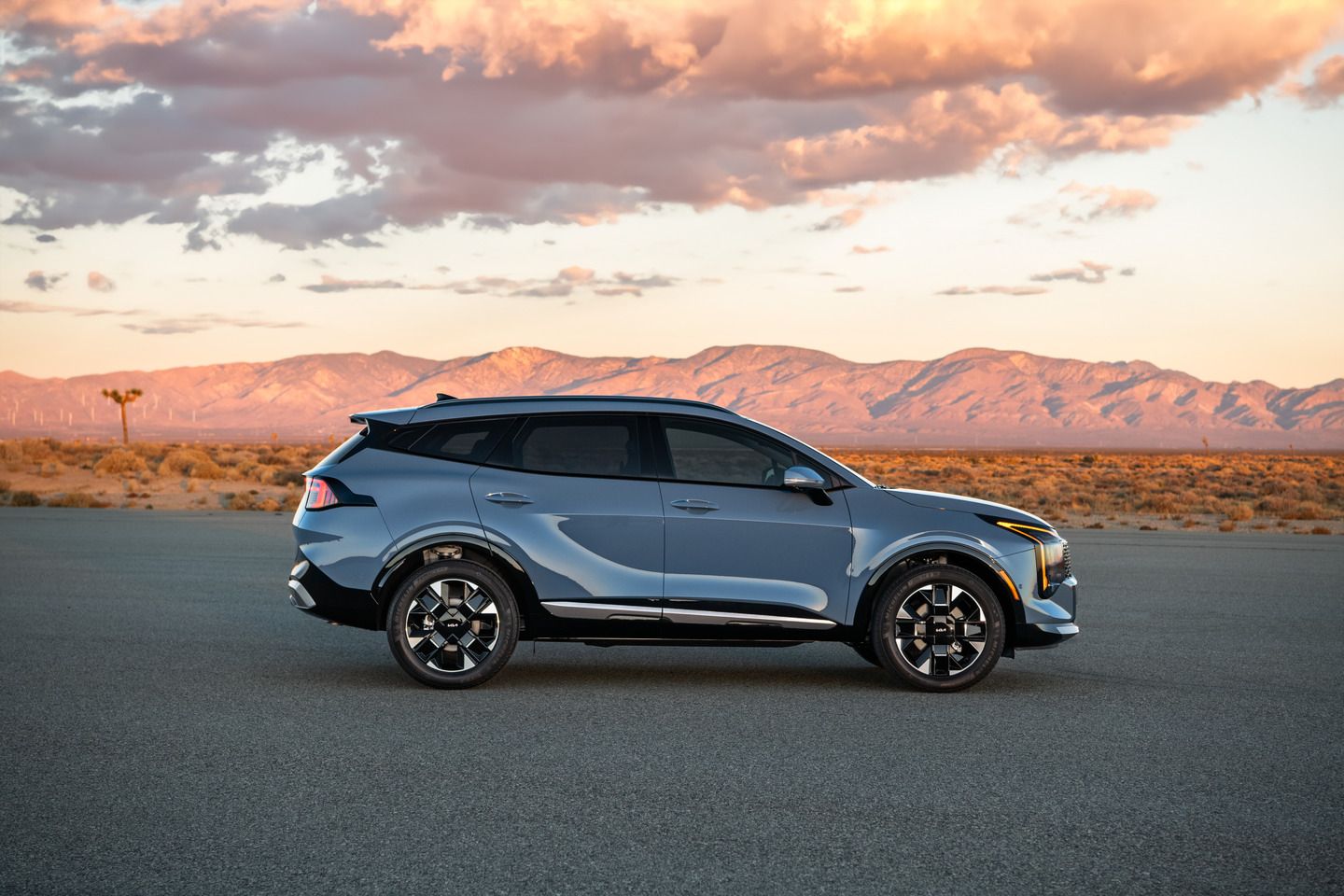
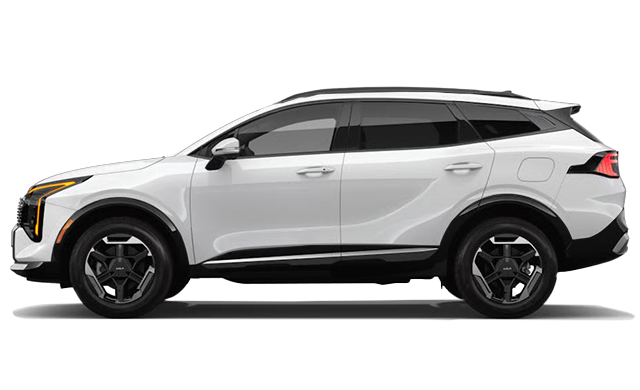
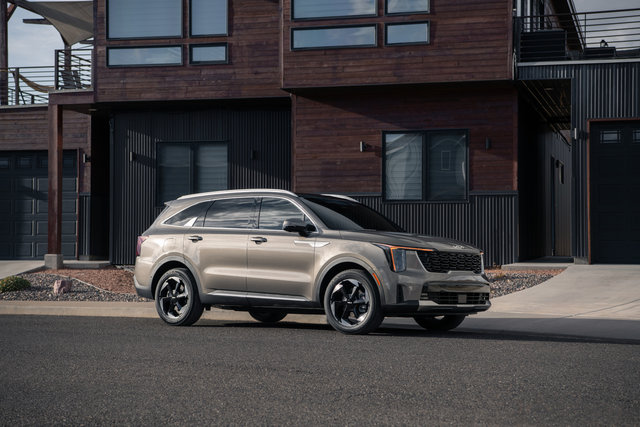
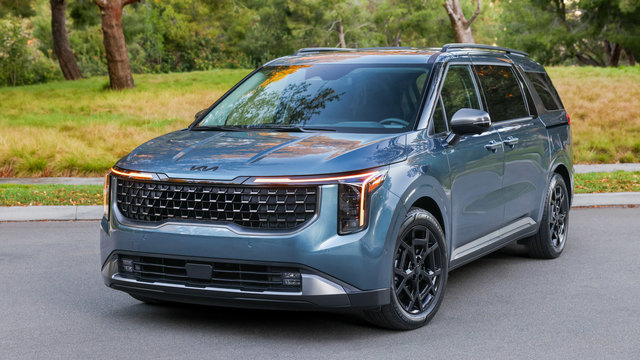
The 2026 Kia Sportage HEV and Sorento HEV share the same hybrid powertrain, AWD capability, and 2,000 lb (907 kg) towing rating. For Quebec drivers who've outgrown compact crossovers but don't need seven seats, the Sportage HEV delivers more power in a tighter package without sacrificing hybrid fuel economy.
Both vehicles use Kia's 1.6L turbocharged hybrid system with a permanent magnet synchronous motor and six-speed automatic transmission. The Sportage HEV generates 232 hp and 271 lb-ft of torque - 5 hp and 13 lb-ft more than the Sorento HEV's 227 hp and 258 lb-ft. That torque advantage translates to sharper acceleration and more confident highway merging while consuming less fuel.
The Sportage HEV achieves 6.7 L/100 km combined (6.6 highway, 6.7 city). The Sorento HEV returns 7.0 L/100 km combined (6.7 highway, 7.2 city). The Sportage's smaller footprint and lighter weight allow the hybrid system to work more efficiently, particularly in stop-and-go urban driving.
|
Feature
|
2026 Kia Sportage HEV
|
2026 Kia Sorento HEV
|
|
Power
|
232 hp
|
227 hp
|
|
Torque
|
271 lb-ft
|
258 lb-ft
|
|
Fuel Economy (Combined)
|
6.7 L/100 km
|
7.0 L/100 km
|
|
Cargo Volume (Behind 2nd Row)
|
977 - 1,119 L
|
1,090 - 1,274 L
|
|
Towing Capacity
|
2,000 lb (907 kg)
|
2,000 lb (907 kg)
|
|
Seating
|
5-passenger
|
6-passenger
|
The Efficiency Advantage
The Sportage HEV's 6.7 L/100 km combined rating offers peak hybrid efficiency. The smaller vehicle mass means the electric motor contributes more during low-speed acceleration, reducing engine load.
City efficiency separates the two more clearly. The Sportage's 6.7 L/100 km city rating stays identical to its combined figure, while the Sorento climbs to 7.2 L/100 km. The Sportage's lighter weight allows the electric motor to handle more acceleration events without firing the gasoline engine, particularly in the 0-50 km/h range.
Power and Performance
The Sportage HEV's 232 hp and 271 lb-ft output comes from the same powertrain as the Sorento, but the power-to-weight advantage changes the driving character. The Sportage pulls harder from standstill and delivers more immediate throttle response when merging onto highways.
Torque delivery matters more than peak horsepower in daily driving. The Sportage's 271 lb-ft arrives low in the rev range, allowing the hybrid system to keep engine RPM below 3,000 during most acceleration events. The Sorento's 258 lb-ft feels adequate but requires slightly more throttle input for the same passing maneuvers.
Towing Capability
Both vehicles share the same 2,000 lb (907 kg) towing capacity when properly equipped. The hybrid powertrain's electric motor provides additional low-end torque for trailer launches. For Quebec drivers hauling a small utility trailer, jet ski, or pop-up camper, both vehicles handle the task identically.
The Sportage's shorter wheelbase may affect trailer stability at highway speeds. The Sorento's longer wheelbase provides more leverage against trailer sway, particularly in crosswinds. For occasional towing under 1,500 lb (680 kg), the Sportage handles the load without issue. For regular towing closer to the 2,000 lb (907 kg) limit, the Sorento's platform stability matters more.
Interior and Technology
The Sportage HEV's interior prioritizes driver-focused technology over passenger volume. The 12.3-inch multimedia interface runs Kia Connect with over-the-air updates, matching the Sorento's system. Wireless phone charging comes standard on EX Premium and SX trims.
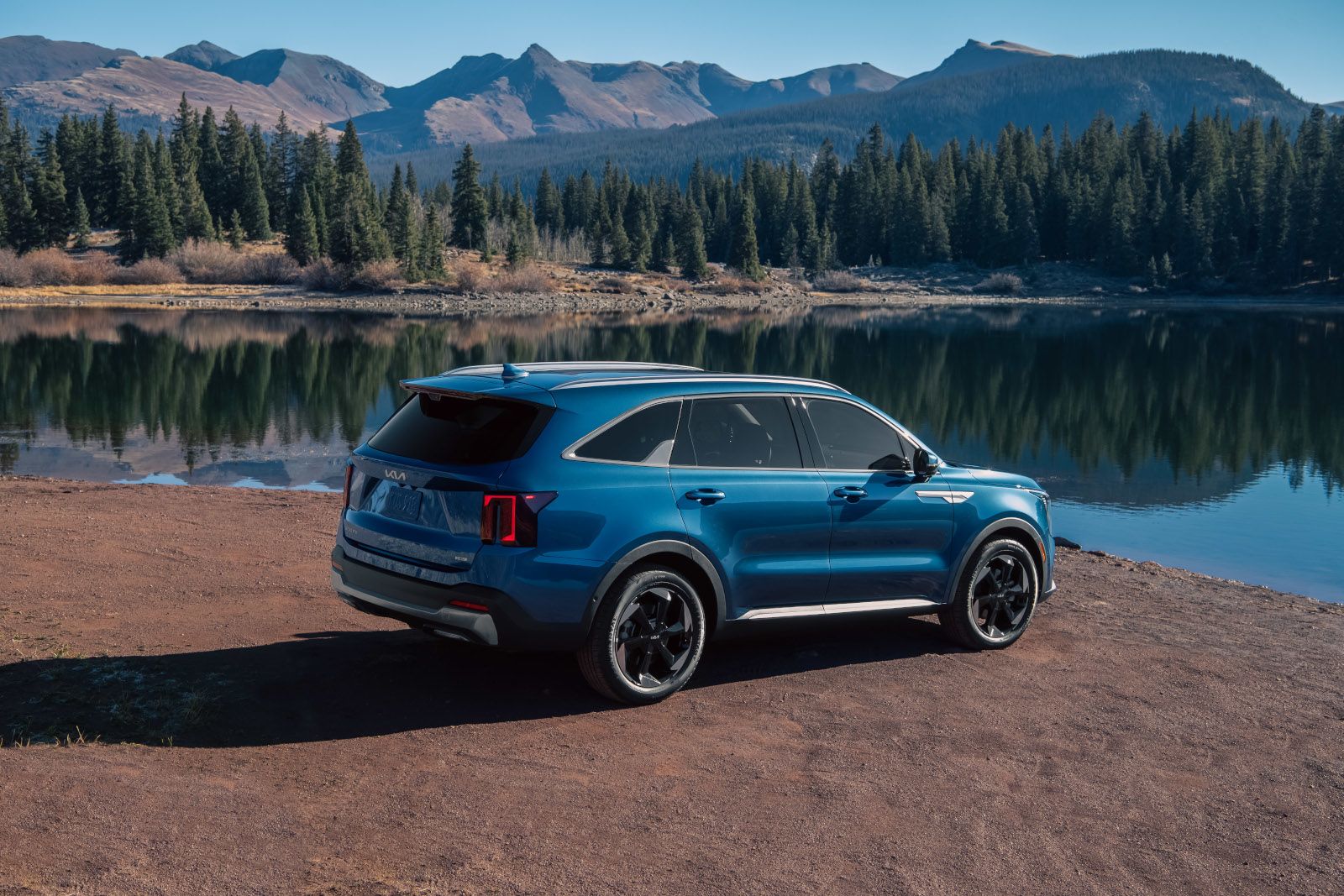
The Sorento HEV's cabin adds a third row and 6-passenger seating on higher trims. Both vehicles include the same 12.3-inch multimedia interface with Kia Connect features. The Sorento includes Bose premium audio on SX trim, while the Sportage offers Harman Kardon - both deliver clear sound staging.
Cargo volume differs based on seating configuration. The Sportage offers 977 - 1,119 litres behind the second row. The Sorento provides 1,090 - 1,274 litres behind the second row (with third row folded), and 357 litres behind the third row when all seats are in use. For drivers who regularly haul lumber, sports equipment, or camping gear, the Sorento's flexible seating configuration accommodates larger loads.
Safety Features
The Sportage HEV includes Forward Collision Avoidance (FCA 1.5), Highway Drive Assist 1, and Lane Following Assist 2 as standard equipment. Highway Drive Assist 1 provides semi-autonomous highway cruising, maintaining lane position and following distance on divided highways.
The Sorento HEV adds Highway Drive Assist 2 and Forward Collision Avoidance 2 (FCA 2) on higher trims, along with Blind Spot Collision Avoidance (BCA-R) and Rear Occupant Alert. The upgraded FCA 2 system detects crossing traffic at intersections and can apply emergency braking. The Sorento's nine airbags (vs the Sportage's eight) provide additional occupant protection.
Both vehicles include Surround View Monitor and Blind View Monitor. The Sportage adds Remote Smart Parking Assist (RSPA), allowing drivers to park the vehicle from outside using the key fob.
Trim Levels
The Sportage HEV offers three trim levels with AWD, projection LED headlights, heated windshield, and rain-sensing wipers. EX Premium adds 18-inch wheels, panoramic sunroof, and power-folding mirrors. SX trim upgrades to 4-cube projection LED headlights, quilted synthetic leather seats, and air-cooled front seats.
The Sorento HEV's LX trim includes 19-inch alloy wheels, LED headlights, heated front seats, and dual-zone climate control. EX trim adds LED projection headlights, laminated front door glass, synthetic leather seats, and heated steering wheel. SX trim brings LED taillights, panoramic sunroof, genuine leather seats, air-cooled front seats, and heated second-row seats.
Which Hybrid Is Right for You?
If you drive primarily solo or with one passenger and prioritize fuel economy for daily commuting, the Sportage HEV's 6.7 L/100 km combined rating and 232 hp output deliver the efficiency and responsiveness you'll use every day. The compact footprint makes parallel parking easier, and the 977 - 1,119 litre cargo bay handles weekly groceries and weekend ski trips.
If you regularly carry five or six passengers - carpooling, shuttling extended family, or managing youth sports teams - the Sorento HEV's three-row seating and flexible cargo capacity provide the space you'll actually fill. The longer wheelbase improves highway stability when towing near the 2,000 lb (907 kg) limit, and the additional rear legroom keeps adult passengers comfortable on multi-hour drives.
The Verdict
The Sportage HEV proves you don't need three rows to access Kia's hybrid efficiency, advanced driver assistance, and 2,000 lb (907 kg) towing capability. The 232 hp and 271 lb-ft output exceeds the Sorento HEV's figures, and the 6.7 L/100 km combined fuel economy beats the Sorento's 7.0 L/100 km rating - all in a more maneuverable package that fits Quebec's urban parking realities better.
The Sorento HEV's flexible seating configuration and six-passenger capacity answer a different question: what do you do when you genuinely need the third row? For drivers whose families have outgrown five seats, the Sorento delivers that space without abandoning hybrid efficiency. For everyone else, the Sportage HEV handles everything the Sorento does - minus the third row you weren't using anyway.
Visit Kia Gaspésie in Gaspé to explore both vehicles and determine which seating configuration matches your actual passenger count. The hybrid powertrain delivers the same efficiency and AWD capability in both platforms - the decision comes down to how many seats you fill on a typical weekend.
Pour en savoir plus sur le Kia Sorento HEV 2026, visitez Kia.ca